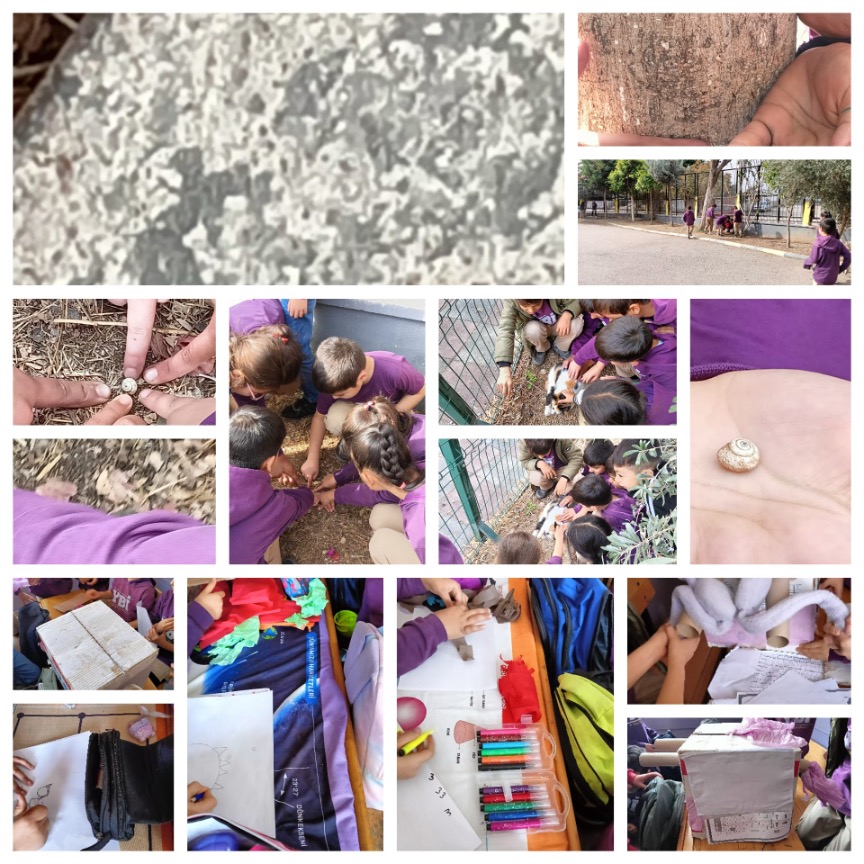
Third-grade students at Yusuf Bayık Primary School in Türkiye took part in an inspiring pilot activity. The 90-minute workshop invited children to design imaginary organisms adapted to a new environment using natural materials. Through the game, students explored key ecological concepts such as adaptation, survival strategies, and food chains in a hands-on, engaging way.
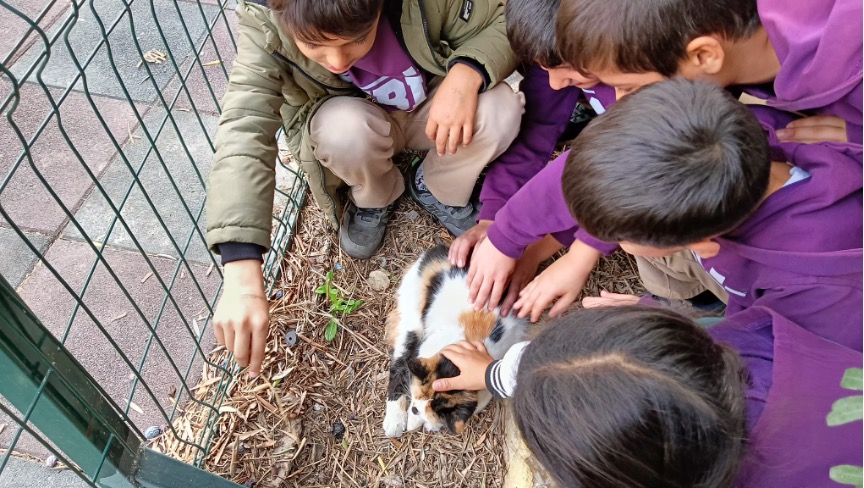
The session began with a short outdoor exploration walk, where students observed natural elements in the schoolyard and collected materials such as feathers, leaves, and twigs. This initial step boosted curiosity, motivation, and active participation.
During the creative design phase, students combined natural materials with drawing tools to create their own imaginary organisms. The teacher guided them with questions about the characteristics of their creatures — what they eat, how they defend themselves, and how they survive. In this way, children applied ecological knowledge playfully and creatively.
In the final stage, each group positioned their invented creatures within a food chain and illustrated the ecological relationships on large sheets of paper. This helped them understand how ecosystems function and how organisms depend on one another.
The activity generated significant educational benefits:
students gained insight into how organisms adapt to their environments,
creativity and design skills were strengthened,
oral presentations improved communication and confidence,
analytical thinking developed through constructing food chains.
This pilot activity is an excellent example of how science, art, and role-play can be combined into an interactive, creative, and memorable learning experience.
A suggested follow-up includes creating an “Ecological Gallery” to display the creatures, as well as assigning weekly observation tasks focused on real plants or animals.
The program clearly demonstrates how creativity and experiential learning can greatly enhance environmental education.